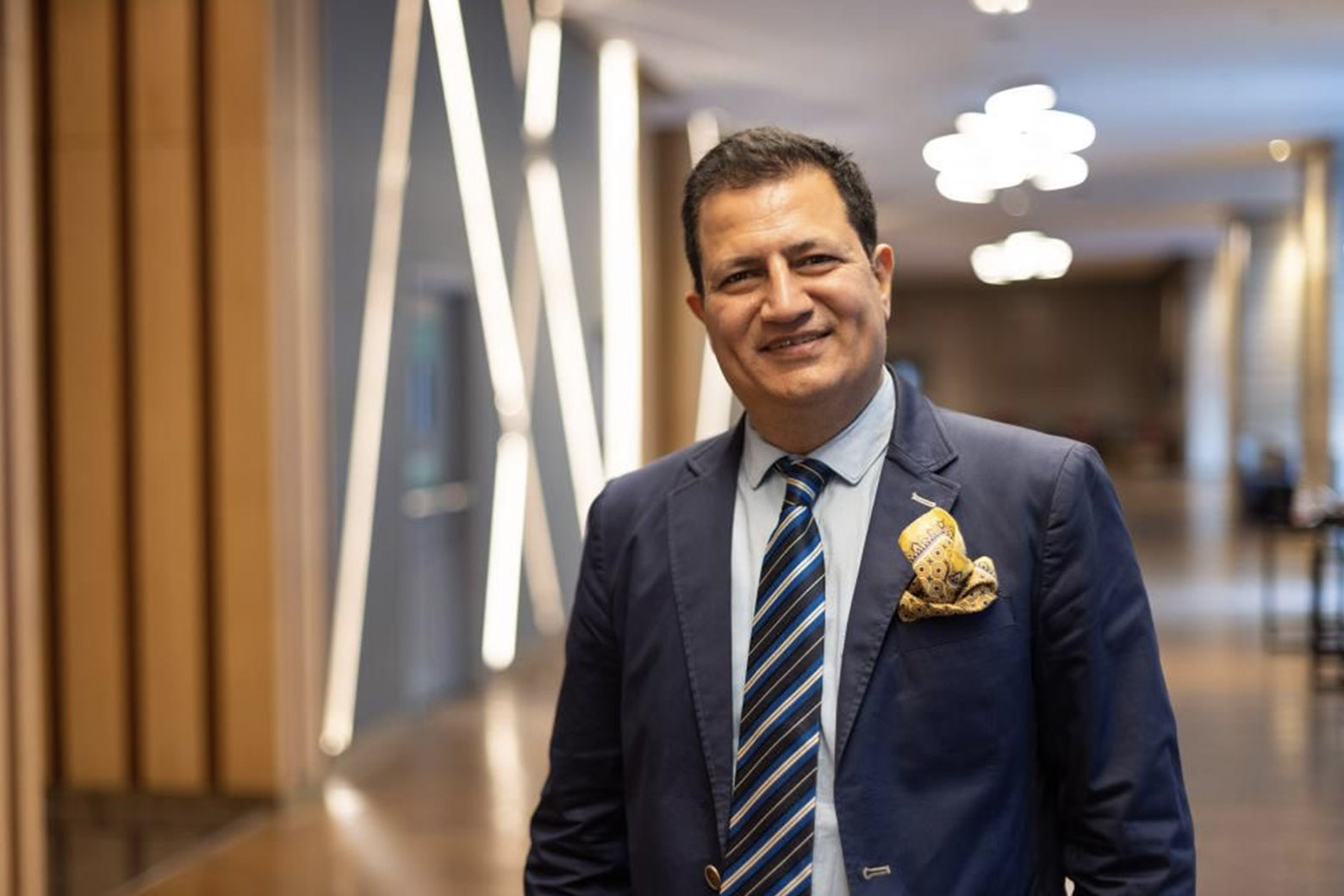




In an industry where buzzwords often overshadow substance, Randhir Gupta, Vice President – Commercial and Business Development at Mayfair Hotels & Resorts, is a rare breed. Measured in tone but expansive in vision, Gupta is quietlybut decisivelysteering one of India’s most loved regional luxury hotel chains into national prominence.
“We’ve always been deeply rooted in the East and Northeast,” he says with a calm confidence that belies the scale of what he’s building. “But the time has come to take Mayfair beyond the comfort zone.”
And so begins the next chapter of Mayfair Hotels—one defined not just by its signature tea estates and temple-side retreats, but by a modern portfolio of wedding destinations, convention centres, coastal getaways and soon, a national footprint curated under Gupta’s leadership.
From regional pride to national plans
Mayfair’s journey began in 1982 and for decades, its story has been synonymous with luxury hospitality in states like Odisha, Sikkim, West Bengal and Assam. Gupta, who leads the group’s strategic development and commercial outreach, is now expanding that narrative.
“Today, out of our 18 hotels, 14 are owned and operated. But the future is management contracts,” he says. “The asset-light model gives us scale without the time-consuming capital investment. We already have the brand equity; now, it’s about replication and speed.”
This shift, timely and tacticalis already visible. Gupta has overseen the expansion of Mayfair Elixir, the group’s management-led vertical, into high-potential destinations like Goa, Alibaug, Purnia and Guwahati, with several more in the pipeline. “Elixir is the fast-track to the future,” he says. “And the response so far has been phenomenal.”
Pilgrimage, legacy and the business of faith
Gupta’s vision doesn’t just chase markets. It understands cultural rhythms. He’s acutely aware that India’s luxury segment isn’t monolithic. For every wedding party in Goa, there’s a spiritual seeker looking for tranquility near Neem Karoli Baba’s temple in Almora.
“Pilgrimage has always been a strong vertical for us,” he says, referencing Mayfair’s two legacy hotels in Puri, which date back to the 1980s. “Now, we’re creating spaces for the new generation of spiritual travellers—those who want devotion and design in equal measure.”
The upcoming Almora property, for instance, is situated just 45 km from the Neem Karoli Ashram. Phase one will include only 12 to 13 luxury cottages. “We’re not chasing room counts. We’re chasing resonance,” he emphasises.
Building horizontally, thinking vertically
What truly sets Gupta’s Mayfair apart in a crowded luxury market is its design philosophy. “We don’t build vertical,” he says flatly. “We build across the land. We integrate, not impose.”
Indeed, Mayfair’s properties are often sprawling retreats where the architecture bends to nature. The Siliguri property, for instance, is set amidst 1,000 acres of tea gardens, with only 50 acres developed for hospitality use. The JungpanaEstate, once a summer home of the King of Nepal, spans across 450 acres and includes 11 waterfalls and a functioning tea factory.
“These are the kinds of experiences you can’t replicate in city hotels,” says Gupta. “This is where Mayfair is different. We don’t just serve guests, we immerse them.”
The Guwahati power play
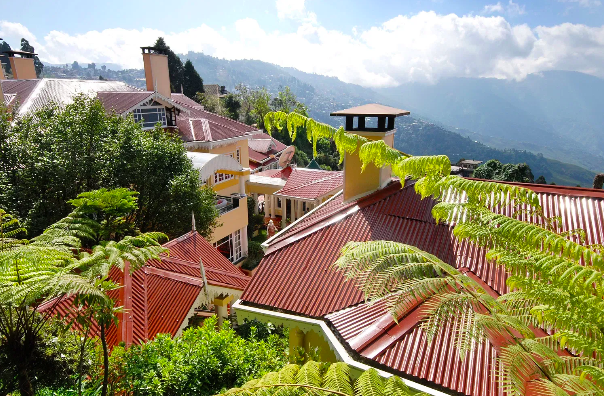
One of Gupta’s most ambitious projects to date is the Mayfair Elixir Guwahati, a 260-key resort spread over 50 acres with one of the largest convention centres in India. With an 80,000 sq. ft. ballroom, 15,000 sq. ft. pre-function area and capacity to host events for up to 10,000 people, it’s a signal to the MICE and destination wedding segment that Mayfair is ready for the big league.
“We call it India’s northeastgateway,” Gupta says. “Guwahati isn’t just a city. It’s a springboard, both for business and leisure.”
The property is set to grow further, with 180 more keys in development, which would bring the total to 440—making it one of the largest in the country by room count.
The loyalty factor (and what’s in store)
Gupta is also overseeing the creation of Mayfair’s first official loyalty programme, set to launch in Q3 of 2025. But he points out that brand loyalty already runs deep without one.
“Over 80 per cent of our guests are repeat visitors,” he says. “If you stay at Mayfair Darjeeling and love it, chances are, the next time you’re in Goa, you’ll look for Mayfair again. That’s not transactional loyalty, it’s emotional.”
The new programme aims to formalise this relationship while keeping it personal. “We’re not about collecting points. We’re about collecting memories,” Gupta smiles.
Domestic first, but global on the horizon
For now, Gupta is focusing on India. “We’re evaluating a lot of destinations—Almora is just the beginning,” he says. “There’s so much untapped beauty here that just needs the right kind of luxury product.”
But he doesn’t rule out international expansion. “We’re getting ready. India is the focus right now, but we’re definitely exploring options abroad. When we do go out, it’ll be with the same DNA—nature-first, experience-driven luxury.”
Calm in the chaos
Even as the global hospitality market navigates uncertaintyfrom wars in Europe to economic stagnation, Gupta remains measured in his optimism.
“Yes, inbound tourism is still soft,” he acknowledges. “But domestic demand has been our backbone. Summer is full of MICE and leisure travel, winter brings in weddings. We’ve learned to read the cyclesand stay resilient.”
He’s not a fan of knee-jerk strategies. “Markets will always swing. The key is not to panic. Build value, stay consistent and the guests will keep coming.”
Looking ahead: More land, fewer rooms
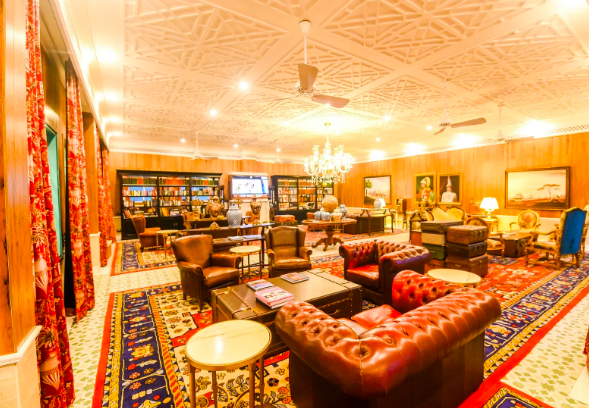
In a time when many luxury chains are obsessed with scaling room inventory, Gupta has a counter-intuitive philosophy: more land, fewer rooms.
“Our new properties won’t be about packing in rooms,” he says. “They’ll be about maximising experience per guest. Almora will start with just 13 cottagesfor a reason. We’re creating sanctuaries, not hotels.”
That belief, almost spiritual in its clarityis what defines Gupta’s leadership. He is not trying to outpace the competition. He’s trying to outlast them.
As Mayfair prepares to expand its footprintfrom the beaches of Goa to the foothills of Uttarakhand, Randhir Gupta is proving that hospitality doesn’t have to shout to stand out. In his quiet, calculated way, he’s remapping Indian luxury, one thoughtful destination at a time.
“We’re not chasing trends,” he says. “We’re building legacies. And we’re doing it with nature, heritage and heart.”
Please make a box for this
What’s next for Mayfair
Almora (Uttarakhand): Opening Q1 2026, 13 ultra-luxe cottages in phase1
Mayfair Elixir loyalty program: Launching late 2025
Expansion pipeline: Several management contract properties under discussion.
Current strength: 18 hotels, with majority in East/Northeast India.
New markets: Goa, Alibaug, Purnia and Guwahati.
Focus areas: Pilgrimage, MICE, destination weddings, boutique luxury.